
Learning Made Simple
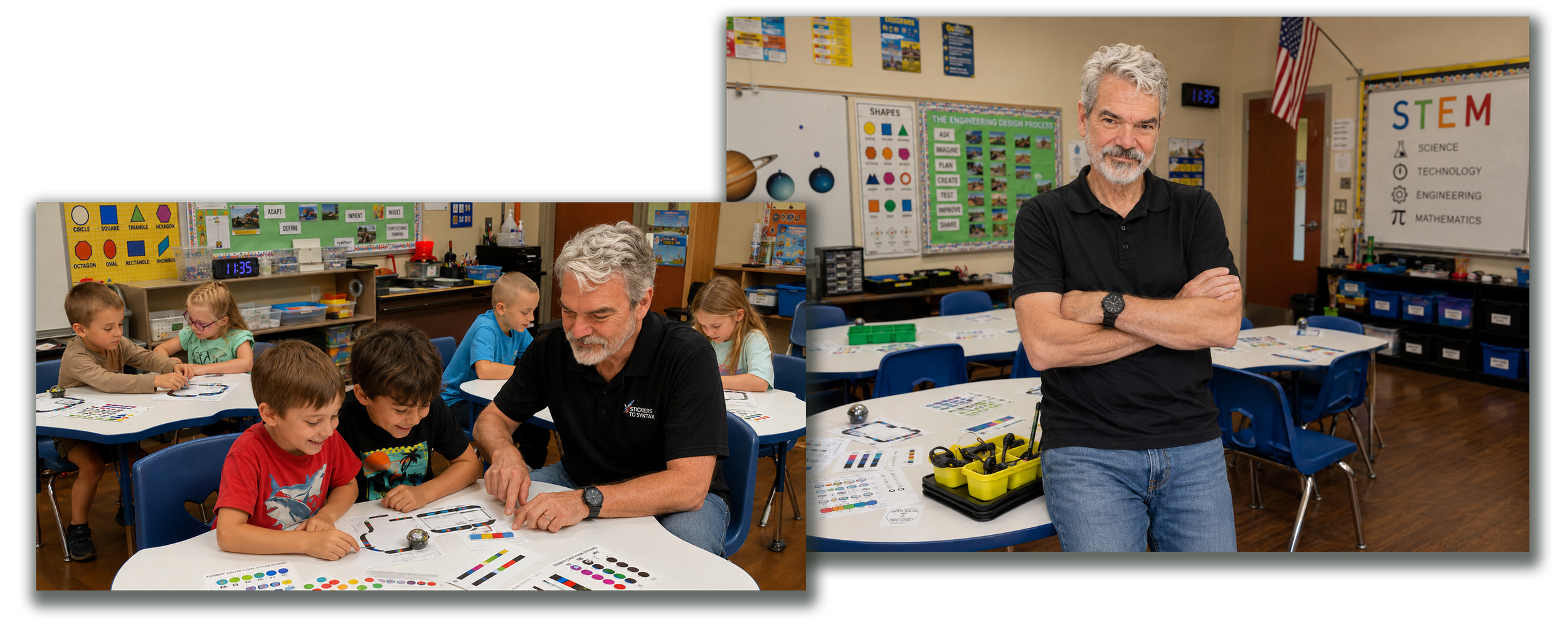
For the first several years of my teaching career, I taught in traditional elementary classrooms—first grade, then fourth grade. When I was asked to transition into Computer Science, I eagerly accepted the change. A few years later, that program evolved into a full K–5 STEM program.
I'll be honest: teaching STEM to kindergarten through second grade was much harder than I expected. My experience with early learners was very limited to my very first year of teaching.
I knew the content, but I hadn't yet learned how young children think, explore, and learn. I quickly realized that simply making lessons "easier" wasn't enough. Early learners needed a completely different approach. I struggled to adapt.
Everything changed when I was accepted into the ISTE Early Learners Community of Practice. Working alongside incredible educators from around the world transformed the way I teach. I discovered that computational thinking doesn't begin when students write their first line of code—it begins much earlier through curiosity, play, problem-solving, patterns, sequencing, and exploration.
That realization became the foundation of Stickers to Syntax.
Today, my favorite classes are often with my youngest students. I believe that when we intentionally nurture computational thinking through playful, age-appropriate experiences, children develop the confidence and habits of mind that make coding feel natural later on. By the time my students reach fifth grade, many are writing Python—not because they memorized syntax, but because they've spent years learning how to think like programmers.
My hope is that the lessons, ideas, and resources on this site help you discover the same thing I did: computational thinking can—and should—begin in kindergarten.
Have Questions? Let’s Talk
Send us a quick note and let’s figure things out together—we’re excited to help you reach and teach your early learners.